Abstract
With the advancement of digitalization, the deep integration of digital technology and business activities has made entrepreneurship a more appealing career choice. Digital entrepreneurship has become increasingly popular among the younger generation, presenting new requirements for innovation and entrepreneurship education in universities. Grounded in Conservation of Resources Theory, this study empirically examines the effects of the overall level and five dimensions of social emotional skills on college students' digital entrepreneurial intention using a questionnaire survey. The results show that the overall level of social emotional skills has a significant positive effect on digital entrepreneurial intention. Among the five dimensions, open-mindedness, emotional regulation, and engaging with others have significant positive effects on digital entrepreneurial intention, with open-mindedness exhibiting the strongest effect, followed by engaging with others and emotional regulation. In contrast, the effects of task performance and collaboration are not statistically significant. By exploring the comprehensive mechanism through which social emotional skills influence digital entrepreneurial intention, this study both verifies the overall predictive effect of social emotional skills and reveals the differential impacts of its dimensions on the formation of digital entrepreneurial intention, thereby enriching research in the field of digital entrepreneurship. Furthermore, it provides an important reference for universities to optimize their innovation and entrepreneurship education systems and implement targeted competency development.
|
Published in
|
American Journal of Applied Psychology (Volume 15, Issue 2)
|
|
DOI
|
10.11648/j.ajap.20261502.12
|
|
Page(s)
|
43-52 |
|
Creative Commons
|

This is an Open Access article, distributed under the terms of the Creative Commons Attribution 4.0 International License (http://creativecommons.org/licenses/by/4.0/), which permits unrestricted use, distribution and reproduction in any medium or format, provided the original work is properly cited.
|
|
Copyright
|
Copyright © The Author(s), 2026. Published by Science Publishing Group
|
Keywords
Social Emotional Skills, Digital Entrepreneurial Intention, Conservation of Resources Theory, Entrepreneurship
1. Introduction
The rapid development and cross-border integration of digital technologies have continuously generated new formats and models of employment and entrepreneurship. This trend not only imposes higher demands on entrepreneurs' comprehensive capabilities but also encourages more individuals to pursue digital entrepreneurship. Digital entrepreneurship refers to entrepreneurial activities that leverage digital technologies to create, develop and scale businesses
| [19] | Rodríguez-González, T., Villanueva-Flores, M., Diaz-Fernandez, M., & Lohse, H. U. (2026). Individual entrepreneurial orientation and digital entrepreneurial intention: Examining the mediating role of digital competencies. Education + Training, 68(2), 184~204. https://doi.org/10.1108/ET-01-2025-0011 |
[19]
, encompassing the identification and pursuit of entrepreneurial opportunities
| [2] | Berman, T., Stuckler, D., Schallmo, D., & Kraus, S. (2024). Drivers and success factors of digital entrepreneurship: A systematic literature review and future research agenda. Journal of Small Business Management, 62(5), 2453~2481.
https://doi.org/10.1080/00472778.2023.2238791 |
[2]
. As an emerging form of entrepreneurship rooted in traditional practices, digital entrepreneurship exhibits a deep connection with technologies such as the internet, big data, artificial intelligence, and cloud computing. As the trend toward integrating digital entrepreneurship education with digital technology in higher education becomes increasingly prominent, digital entrepreneurship has emerged as a popular career choice among the younger generation. Against this background, identifying the influencing factors of university students' digital entrepreneurial intention and clarifying their mechanisms are of great practical significance for optimizing the entrepreneurship curriculum system in higher education and improving the effectiveness of entrepreneurship education.
As the digital-native generation, university students are naturally endowed with high acceptance of and proficiency in digital technologies. The level of their digital entrepreneurial intention is not only related to their personal career development and self-fulfillment, but also strategically important for alleviating employment pressure, fostering new economic growth drivers, and promoting the high-quality development of the digital economy. As digital innovation and entrepreneurship have become a major force driving economic growth and social progress, cultivating interdisciplinary talent equipped with both digital literacy and an entrepreneurial spirit has emerged as a new direction for the development of innovation and entrepreneurship education in higher education institutions. This requires not only attention to students' cognitive abilities and professional skills, but also greater emphasis on their emotional, social, and behavioral competencies. Therefore, an in-depth investigation into the formation mechanism of university students' digital entrepreneurial intention is of great value for education and is also critical to the sustainable development of the economy and society. However, in practice, the success rate of digital entrepreneurship among university students remains low. Although some students possess a certain foundation in digital technology, they lack the comprehensive capabilities to cope with entrepreneurial uncertainty, coordinate resources across different domains, and regulate their own emotions, making it difficult to effectively translate entrepreneurial intention into actual entrepreneurial behavior. This reality suggests that social emotional skills may play a key role in the transition from entrepreneurial intention to entrepreneurial behavior. Nevertheless, empirical research on the distinct influence paths of their various dimensions on digital entrepreneurial intention is still insufficient.
Social emotional skills refer to the abilities, acquired through formal and informal learning, to demonstrate consistent patterns of thinking, emotion, and behavior that drive lifelong socio-economic development. These skills involve how individuals recognize and regulate their emotions, collaborate with others, and respond to complex situations. To some extent, these skills determine whether individuals can effectively cope with uncertainty and interpersonal challenges in the entrepreneurial process, making them indispensable core qualities for entrepreneurs in the digital era. As pointed out by the Organisation for Economic Co-operation and Development, a broad and balanced set of skills—including social emotional skills—helps individuals succeed in modern society and build a better future
. However, existing research and educational practices have largely overlooked the role of these skills, particularly in the context of digital entrepreneurship among university students.
Therefore, grounded in the Conservation of Resources (COR) theory, this study employs a questionnaire survey method with 270 college students in Guangdong Province, China, as participants, and empirically examines how the five dimensions of social emotional skills, as well as their overall level, impact digital entrepreneurial intention in the context of digital entrepreneurship. By further exploring the comprehensive mechanism through which these factors influence digital entrepreneurial intention and clarifying the relative importance of the overall level and each dimension of social emotional skills in the formation of digital entrepreneurial intention, this study not only helps enrich theoretical research in the field of digital entrepreneurship but also provides a new perspective for investigating the intentions and decision-making of other entrepreneurial groups, and offers some valuable insights for higher education institutions, which can guide them in optimizing their innovation and entrepreneurship education systems and in conducting targeted competency development.
2. Literature Review
2.1. Social Emotional Skills
Social emotional skills refer to the integrated capabilities that individuals demonstrate through stable patterns of thinking, emotion, and behavior. These skills, acquired through formal and informal learning, facilitate lifelong socio-economic development
. Encompassing five dimensions—task performance, emotional regulation, collaboration, open-mindedness, and engaging with others—they reflect an individual's capacity to effectively cope with challenges, build relationships, and make responsible decisions in complex social contexts. Given the broad scope of this concept, the academic community often uses terms such as soft skills, non-cognitive skills, emotional intelligence, and personality traits to refer to similar constructs, and these terms are often used interchangeably in specific contexts
| [21] | Schoon, I. (2021). Towards an Integrative Taxonomy of Social-Emotional Competences. Frontiers in Psychology, 12, 515313. https://doi.org/10.3389/fpsyg.2021.515313 |
| [22] | Shi, J., Qiu, H., & Ni, A. (2023). The Moderating Role of School Resources on the Relationship Between Student Socioeconomic Status and Social-Emotional Skills: Empirical Evidence from China. Applied Research in Quality of Life, 18(5), 2349~2370. https://doi.org/10.1007/s11482-023-10188-7 |
[21, 22]
. On this basis, the Big Five personality trait model provides an effective unifying framework for broadly categorizing various social emotional skills
| [15] | Murano, D., Lipnevich, A. A., Walton, K. E., Burrus, J., Way, J. D., & Anguiano-Carrasco, C. (2021). Measuring social and emotional skills in elementary students: Development of self-report Likert, situational judgment test, and forced choice items. Personality and Individual Differences, 169, 110012.
https://doi.org/10.1016/j.paid.2020.110012 |
| [29] | Zhang, J., Wang, F., & King, R. B. (2025). Beyond intelligence: Exploring the role of growth mindsets in the domain of social–emotional skills. British Journal of Educational Psychology, bjep. 70037. https://doi.org/10.1111/bjep.70037 |
[15, 29]
. Existing research indicates that social emotional skills are closely related to individuals' well-being, life outcomes, and academic performance
| [8] | Guo, J., Tang, X., Marsh, H. W., Parker, P., Basarkod, G., Sahdra, B., Ranta, M., & Salmela-Aro, K. (2023). The roles of social–emotional skills in students’ academic and life success: A multi-informant and multicohort perspective. Journal of Personality and Social Psychology, 124(5), 1079~1110.
https://doi.org/10.1037/pspp0000426 |
| [25] | Soto, C. J., Napolitano, C. M., Sewell, M. N., Yoon, H. J., & Roberts, B. W. (2024). Going Beyond Traits: Social, Emotional, and Behavioral Skills Matter for Adolescents’ Success. Social Psychological and Personality Science, 15(1), 33~45.
https://doi.org/10.1177/19485506221127483 |
[8, 25]
. In educational settings, adolescents with strong social emotional skills generally exhibit higher educational expectations, lower school-related anxiety, and more positive interpersonal perceptions
| [11] | Huttunen, I., Upadyaya, K., & Salmela-Aro, K. (2025). Adolescents’ social-emotional skills profiles, relationships at school, school anxiety, and educational aspirations. European Journal of Psychology of Education, 40(2).
https://doi.org/10.1007/s10212-025-00954-6 |
[11]
. Furthermore, the influence of these skills on academic performance varies across different contexts
| [13] | Liu, Z., Guo, J., Huang, H., & Tang, X. (2025). Which social-emotional skills are most important for students’ learning and well-being? An international comparison among China, USA and Finland. Learning and Individual Differences, 121, 102703. https://doi.org/10.1016/j.lindif.2025.102703 |
[13]
. Additionally, the formation and development of social emotional skills are shaped by various factors. For instance, sports participation can affect mental well-being through its impact on social emotional skills
| [18] | Qian, J., Zhang, X., Wang, K., & Liang, J. (2025). The role of social-emotional skills in sports participation and mental well-being across different demographics. Learning and Individual Differences, 120, 102695.
https://doi.org/10.1016/j.lindif.2025.102695 |
[18]
, and support from school resources can, to some extent, mitigate the negative effects of low socioeconomic status on students' social emotional development
| [22] | Shi, J., Qiu, H., & Ni, A. (2023). The Moderating Role of School Resources on the Relationship Between Student Socioeconomic Status and Social-Emotional Skills: Empirical Evidence from China. Applied Research in Quality of Life, 18(5), 2349~2370. https://doi.org/10.1007/s11482-023-10188-7 |
[22]
.
2.2. Digital Entrepreneurial Intention
Digital entrepreneurial intention is defined as an individual's cognitive tendency and belief to choose and pursue a career in digital entrepreneurship in the future
| [1] | Aloulou, W., Ayadi, F., Ramadani, V., & Dana, L.-P. (2024). Dreaming digital or chasing new real pathways? Unveiling the determinants shaping Saudi youth’s digital entrepreneurial intention. International Journal of Entrepreneurial Behavior & Research, 30(2/3), 709~734.
https://doi.org/10.1108/IJEBR-10-2022-0942 |
[1]
. It reflects their willingness to engage in entrepreneurial activities using digital technologies and to further explore new business domains
| [26] | Ta, H. H., Layeghi, G., Delladio, S., Nguyen, V. H. A., & Caputo, A. (2025). Examining the impact of big five personality traits and digital competencies on digital entrepreneurial intention: The mediating role of digital self-efficacy. International Entrepreneurship and Management Journal, 21(1), 112.
https://doi.org/10.1007/s11365-025-01143-z |
[26]
, with an emphasis on the application of digital tools and technologies
| [12] | Kerse, G. (2025). From Transformational Leadership Tendency to Digital Entrepreneurship Intention: The Serial Mediation of Entrepreneurial Passion and Intention. Sage Open, 15(4), 21582440251405915.
https://doi.org/10.1177/21582440251405915 |
[12]
. In recent years, research on digital entrepreneurial intention has proliferated, with discussions largely centered on identifying its antecedents. Regarding individual characteristics, personality traits have been a key research focus. Studies indicate that extraversion, openness, and positivity from the Big Five personality traits significantly and positively influence digital entrepreneurial intention
| [26] | Ta, H. H., Layeghi, G., Delladio, S., Nguyen, V. H. A., & Caputo, A. (2025). Examining the impact of big five personality traits and digital competencies on digital entrepreneurial intention: The mediating role of digital self-efficacy. International Entrepreneurship and Management Journal, 21(1), 112.
https://doi.org/10.1007/s11365-025-01143-z |
[26]
. Other psychological traits, such as innovativeness and risk-taking propensity
| [19] | Rodríguez-González, T., Villanueva-Flores, M., Diaz-Fernandez, M., & Lohse, H. U. (2026). Individual entrepreneurial orientation and digital entrepreneurial intention: Examining the mediating role of digital competencies. Education + Training, 68(2), 184~204. https://doi.org/10.1108/ET-01-2025-0011 |
[19]
, as well as individuals' perception of their own creativity
| [4] | Duong, C. D., Bui, H. N., Chu, T. V., Van Pham, T., & Do, N. D. (2024). ICT skills, entrepreneurial self-perceived creativity, and digital entrepreneurship: Insights from the stimulus-organism-response model. Thinking Skills and Creativity, 54, 101646. https://doi.org/10.1016/j.tsc.2024.101646 |
[4]
also positively impact digital entrepreneurial intention. Furthermore, digital self-efficacy and entrepreneurial mindset can effectively stimulate this intention
| [5] | Duong, C. D., & Nguyen, T. H. (2024). How ChatGPT adoption stimulates digital entrepreneurship: A stimulus-organism-response perspective. The International Journal of Management Education, 22(3), 101019. https://doi.org/10.1016/j.ijme.2024.101019 |
| [7] | Ganefri, Waras, Trisno, B., Nordin, N. M., Hidayat, H., Rahmawati, Y., & Nurhidayatulloh. (2025). Cultivating digital entrepreneurs: Unravelling factors shaping digital entrepreneurial intention among engineering students in higher education. The International Journal of Management Education, 23(2), 101100. https://doi.org/10.1016/j.ijme.2024.101100 |
[5, 7]
. Individuals possessing these traits are often more adept at identifying and seizing entrepreneurial opportunities in the digital marketplace, thereby increasing the likelihood of entrepreneurial success. Regarding external factors, research indicates that gamifying online entrepreneurship education promotes digital entrepreneurial intention by enhancing digital policy awareness and digital self-efficacy
. Additionally, the entrepreneurial ecosystem and perceived AI competencies jointly influence digital entrepreneurial intention through digital entrepreneurial self-efficacy and individual entrepreneurial orientation
| [27] | Tang, L., Lin, Q., Luo, X., Li, Y., & Lu, M. (2025). The role of AI and entrepreneurial ecosystem in shaping students’ digital entrepreneurial intentions: Evidence from a multi-group analysis. Asia Pacific Journal of Education, 1~25.
https://doi.org/10.1080/02188791.2025.2577334 |
[27]
.
2.3. Research Summary and Gap
To summarize, prior research has established clear definitions of social emotional skills and digital entrepreneurial intention, and has identified various individual and contextual factors influencing the latter. In the field of entrepreneurship research, while existing studies have examined entrepreneurship through the lens of broad or narrow personality traits
| [6] | Elnadi, M., & Gheith, M. H. (2023). The role of individual characteristics in shaping digital entrepreneurial intention among university students: Evidence from Saudi Arabia. Thinking Skills and Creativity, 47, 101236.
https://doi.org/10.1016/j.tsc.2023.101236 |
| [20] | Runst, P., & Thomä, J. (2025). Personality Traits and the Likelihood of Self-Employment: A Journey into the Crafts’ Way of Doing Business. German Economic Review, 26(3), 229~265. https://doi.org/10.1515/ger-2024-0033 |
[6, 20]
and have touched upon social emotional skills
| [23] | Sinha, K., Magnani, L., & Zhu, R. (2024). From Entry to Persistence: Socio-Emotional Skills and Entrepreneurial Profiles. SSRN. https://doi.org/10.2139/ssrn.4907133 |
| [24] | Soto, C. J., Napolitano, C. M., Sewell, M. N., Yoon, H. J., & Roberts, B. W. (2022). An integrative framework for conceptualizing and assessing social, emotional, and behavioral skills: The BESSI. Journal of Personality and Social Psychology, 123(1), 192~222. https://doi.org/10.1037/pspp0000401 |
[23, 24]
, these explorations warrant further investigation. On the one hand, most current studies explore the role of single factors from a fragmented perspective, lacking systematic attention to comprehensive non-cognitive abilities such as social emotional skills, and have not yet incorporated them as an integrated theoretical construct into the framework of influencing factors in entrepreneurship research. On the other hand, given the well-established positive role of social emotional skills in personal growth, academic achievement, and social adaptation, it is necessary to incorporate them into digital entrepreneurship research to explore their potential influence on the formation of entrepreneurial intention. In other words, social emotional skills not only serve as a crucial foundation for personal development but may also represent a core competency cultivated through entrepreneurship education, thereby acting as a bridge connecting personal growth and entrepreneurial success.
3. Theory and Hypotheses
3.1. Conservation of Resources Theory
The Conservation of Resources (COR) theory was initially proposed by Hobfoll as a stress theory and has since been widely adopted in organizational psychology and organizational behavior research. COR suggests that individuals strive to acquire, retain, protect, and foster valued resources—defined as objects, conditions, personal characteristics, and energies that facilitate goal attainment
| [9] | Halbesleben, J. R. B., Neveu, J.-P., Paustian-Underdahl, S. C., & Westman, M. (2014). Getting to the “COR”: Understanding the Role of Resources in Conservation of Resources Theory. Journal of Management, 40(5), 1334~1364.
https://doi.org/10.1177/0149206314527130 |
| [10] | Hobfoll, S. (1989). Conservation of Resources. American Psychologist, 44, 513~524.
https://doi.org/10.1037/0003-066X.44.3.513 |
[9, 10]
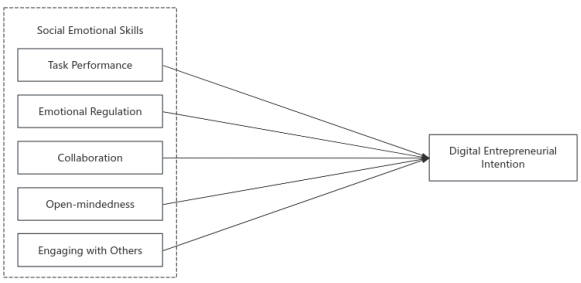
. COR follows two core principles. The first is the primacy of resource loss: the impact of resource loss on individuals is typically more potent and enduring than that of resource gain, and this loss is more likely to trigger a loss spiral. The second is resource investment: individuals must invest their existing resources in order to obtain new resources and to protect against the loss of current resources. Conversely, individuals with greater resource pools are more capable of orchestrating resource gain and are thus more likely to initiate and sustain a gain spiral, thereby fostering further resource accumulation and growth. Guided by these core principles of COR, we constructed the research model for this study, as depicted in
Figure 1.
3.2. Hypotheses
According to Conservation of Resources (COR) theory, individuals with abundant resources are more inclined to invest them in acquiring additional resources and preventing the loss of existing ones. Moreover, they are more likely to initiate and sustain a "gain spiral" through continuous investment, thereby fostering resource accumulation and growth. As a key personal characteristic resource, social emotional skills encompass five dimensions: task performance, emotional regulation, collaboration, open-mindedness, and engaging with others. These skills represent individuals' integrated capabilities at the cognitive, emotional, and behavioral levels, providing a crucial resource base for coping with the uncertainties inherent in digital entrepreneurship. Individuals with high levels of social emotional skills typically excel in areas such as emotional management, interpersonal communication, and goal pursuit. Consequently, they are more likely to perceive entrepreneurship as a resource-value-adding activity, thereby exhibiting stronger digital entrepreneurial intention.
Regarding the specific dimensions of social emotional skills, digital entrepreneurship spans the entire process from opportunity identification to action implementation and requires individuals to possess goal-oriented capabilities. Task performance reflects an individual's ability to set goals, complete tasks, maintain self-control, and demonstrate perseverance. In the digital entrepreneurship context, individuals with strong task performance are more inclined to translate entrepreneurial ideas into practice and are better equipped to persevere in the face of difficulties, making them more likely to develop clear entrepreneurial intentions.
Second, the entrepreneurial process is fraught with uncertainties, which often trigger anxiety and fear of failure. Fear of failure can weaken individuals' entrepreneurial intention to a certain extent. Effective emotional regulation helps individuals maintain a stable mindset when facing pressure and setbacks, mitigating the interference of negative emotions and enabling them to avoid withdrawing from entrepreneurial activities due to temporary difficulties. This positive emotional state, in turn, helps individuals sustain their interest and engagement in digital entrepreneurship, thereby maintaining a high level of digital entrepreneurial intention.
In addition, entrepreneurship typically requires strong interpersonal and teamwork skills. Specifically, individuals who excel at collaboration and engaging with others are more adept at building social networks and gaining trust and support from others. Through these social relationships, they can access valuable information, resources, and emotional support. This access, in turn, enhances their confidence in tackling entrepreneurial challenges and fosters more positive cognitive evaluations and behavioral tendencies toward digital entrepreneurship.
Finally, the essence of entrepreneurship lies in the identification and pursuit of opportunities. Individuals with strong open-mindedness are typically more receptive to novelty and exhibit greater curiosity and cognitive flexibility. This cognitive trait enables them to keenly capture potential business opportunities amidst the dynamic changes of the digital market and renders them more willing to experiment with new business models or technological applications. Consequently, they are more likely to develop an interest in digital entrepreneurship and consider it a viable career path.
Accordingly, this study proposes the following hypotheses:
Hypothesis 1: Social emotional skills have a significant positive influence on college students' digital entrepreneurial intention.
Hypothesis 2: Task performance has a significant positive influence on college students' digital entrepreneurial intention.
Hypothesis 3: Emotional regulation has a significant positive influence on college students' digital entrepreneurial intention.
Hypothesis 4: Collaboration has a significant positive influence on college students' digital entrepreneurial intention.
Hypothesis 5: Open-mindedness has a significant positive influence on college students' digital entrepreneurial intention.
Hypothesis 6: Engaging with others has a significant positive influence on college students' digital entrepreneurial intention.
Figure 1. Research Model.
4. Materials and Methods
4.1. Participants and Procedures
This study aims to examine the impact of social emotional skills on college students' digital entrepreneurial intention. Accordingly, the research participants were primarily undergraduate students. College students were chosen as the research subjects for two main reasons. First, they are in a critical period of career identity formation and exhibit a high willingness to embrace the emerging digital entrepreneurship model, which has become an important career choice for contemporary college students. Second, the higher education environment provides abundant entrepreneurship education resources and practical activities, which lay a solid foundation for the development of their digital entrepreneurial intention.
Data were collected through an online questionnaire administered to students enrolled in several higher education institutions in Guangdong Province. A total of 308 questionnaires were distributed, and 270 valid responses were received, yielding a valid response rate of 87.66%. To ensure questionnaire quality, the research team carefully reviewed and refined the Chinese version to guarantee that all items were clearly expressed and easy to understand. A cover letter was attached to the first page of the questionnaire, informing respondents of the research purpose, the voluntary nature of their participation, and the confidentiality of their responses.
4.2. Measures
All scales used in this study were adopted from validated scales in the existing literature and adapted to suit the research context. Except for the control variables, all items were measured on a 5-point Likert scale, ranging from 1 ("strongly disagree") to 5 ("strongly agree"). The measurement of social emotional skills was adapted from the scale developed by Guo
| [8] | Guo, J., Tang, X., Marsh, H. W., Parker, P., Basarkod, G., Sahdra, B., Ranta, M., & Salmela-Aro, K. (2023). The roles of social–emotional skills in students’ academic and life success: A multi-informant and multicohort perspective. Journal of Personality and Social Psychology, 124(5), 1079~1110.
https://doi.org/10.1037/pspp0000426 |
[8]
, which is based on the social emotional skills framework of the Organisation for Economic Co-operation and Development (OECD) and encompasses five dimensions: task performance, emotional regulation, collaboration, open-mindedness, and engaging with others. Digital entrepreneurial intention was measured using a scale adapted from Duong and Nguyen
| [5] | Duong, C. D., & Nguyen, T. H. (2024). How ChatGPT adoption stimulates digital entrepreneurship: A stimulus-organism-response perspective. The International Journal of Management Education, 22(3), 101019. https://doi.org/10.1016/j.ijme.2024.101019 |
[5]
.
To control for potential confounding effects, this study included several demographic variables and entrepreneurship-related experiences as control variables. The demographic variables comprised gender and age. Entrepreneurship-related experiences included participation in entrepreneurship competitions, receipt of entrepreneurship guidance, and family entrepreneurial background.
5. Results
5.1. Demographics
The demographic characteristics of the respondents are presented in
Table 1. Of the 270 respondents, 71.1% were female (n = 192) and 28.9% were male (n = 78). Regarding age, 86.7% were aged 18-20 years (n = 234), 11.8% were aged 21-23 years (n = 32), and 1.5% were aged 24-26 years (n = 4). Regarding participation in entrepreneurship competitions, 69.3% of the respondents had participated (n = 187), while 30.7% had not (n = 83). Regarding family entrepreneurial background, 51.5% had family members engaged in entrepreneurship (n = 139), and 48.5% did not (n = 131). Regarding entrepreneurship guidance, 61.1% of the respondents had received guidance (n = 165), whereas 38.9% had not (n = 105).
Table 1. Descriptive Statistic of Participant demographic information Total Sample (N=270).
Demographic variable | Category | Frequency | Percentage |
Gender | Female | 192 | 71.1 |
Male | 78 | 28.9 |
Age | 18-20 years old | 234 | 86.7 |
21-23 years old | 32 | 11.8 |
24-26 years old | 4 | 1.5 |
Entrepreneurial competition | Participated | 187 | 69.3 |
Not participated | 83 | 30.7 |
Family entrepreneurship | Has family entrepreneurship | 139 | 51.5 |
No family entrepreneurship | 131 | 48.5 |
Entrepreneurial guidance | Received | 165 | 61.1 |
Not received | 105 | 38.9 |
5.2. Descriptive Statistics
Descriptive statistics and correlation analysis for the study variables are presented in
Table 2. Overall social emotional skills (SES) had a mean of 3.610 (SD = 0.371). Among the five dimensions, task performance (TP) had the highest mean score (M = 4.055, SD = 0.477), followed by collaboration (CO, M = 3.852, SD = 0.470), open-mindedness (OP, M = 3.730, SD = 0.519), and emotional regulation (ER, M = 3.251, SD = 0.558). Engaging with others (EO) had the lowest mean score (M = 3.165, SD = 0.604). Digital entrepreneurial intention (DEI) had a mean of 2.693 (SD = 0.790).
Correlation analysis revealed that overall social emotional skills had a significant positive correlation with digital entrepreneurial intention (r = 0.218, p < 0.01). Among the five dimensions, open-mindedness (r = 0.264, p < 0.01), engaging with others (r = 0.292, p < 0.01), and emotional regulation (r = 0.155, p < 0.05) were all significantly and positively related to digital entrepreneurial intention. The correlations of task performance (r = -0.047, p > 0.05) and collaboration (r = 0.056, p > 0.05) with digital entrepreneurial intention were not statistically significant. In addition, the five dimensions of social emotional skills were moderately intercorrelated, with correlation coefficients ranging from 0.228 to 0.503. This indicates that the five dimensions are interrelated yet distinct, providing a suitable basis for further regression analysis.
Table 2. Means, standard deviations and correlations with confidence intervals.
Variable | Mean | Std. Deviation | 1 | 2 | 3 | 4 | 5 | 6 | 7 |
1. SES | 3.610 | 0.371 | 1 | | | | | | |
2. TP | 4.055 | 0.477 | 0.671** | 1 | | | | | |
3. ER | 3.251 | 0.558 | 0.697** | 0.334** | 1 | | | | |
4. CO | 3.852 | 0.470 | 0.694** | 0.503** | 0.235** | 1 | | | |
5. OP | 3.730 | 0.519 | 0.749** | 0.402** | 0.388** | 0.458** | 1 | | |
6. EO | 3.165 | 0.604 | 0.718** | 0.228** | 0.437** | 0.347** | 0.412** | 1 | |
7. DEI | 2.693 | 0.790 | 0.218** | -0.047 | 0.155* | 0.056 | 0.264** | 0.292** | 1 |
5.3. Hypothesis Test
Table 3. Hierarchical regression results for hypotheses.
| Digital Entrepreneurial Intention |
Variables | Model 1 Est (SE) | Model 2 Est (SE) | Model 3 Est (SE) | Model 4 Est (SE) | Model 5 Est (SE) | Model 6 Est (SE) | Model 7 Est (SE) |
Intercept | 2.463** (0.912) | 1.053** (0.990) | 2.777** (0.963) | 1.860* (0.932) | 2.161* (0.990) | 1.072 (0.948) | 1.310 (0.916) |
Gender | 0.156 (0.105) | 0.179 (0.103) | 0.127 (0.109) | 0.147 (0.104) | 0.165 (0.106) | 0.148 (0.102) | 0.135 (0.101) |
Age | 0.006 (0.047) | -0.001 (0.046) | 0.012 (0.047) | 0.000 (0.047) | 0.005 (0.047) | 0.007 (0.046) | 0.010 (0.045) |
Entrepreneurial Competition | 0.303** (0.106) | 0.241* (0.106) | 0.320** (0.108) | 0.293** (0.105) | 0.294** (0.107) | 0.230* (0.105) | 0.231* (0.104) |
Family entrepreneurship | -0.136 (0.096) | -0.117 (0.094) | -0.143 (0.096) | -0.113 (0.095) | -0.135 (0.096) | -0.120 (0.093) | -0.135 (0.092) |
Entrepreneurial Guidance | 0.111 (0.105) | 0.130 (0.104) | 0.105 (0.106) | 0.137 (0.105) | 0.111 (0.106) | 0.137 (0.103) | 0.106 (0.102) |
Social Emotional Skills | | 0.425** (0.127) | | | | | |
Task Performance | | | -0.106 (0.105) | | | | |
Emotional Regulation | | | | 0.216* 0.085) | | | |
Collaboration | | | | | 0.080 (0.102) | | |
Open-mindedness | | | | | | 0.370** (0.090) | |
Engaging with Others | | | | | | | 0.347** (0.077) |
R2 | 0.054 | 0.093 | 0.058 | 0.077 | 0.057 | 0.112 | 0.123 |
Adjusted R2 | 0.036 | 0.072 | 0.037 | 0.056 | 0.035 | 0.091 | 0.103 |
F | 3.035* | 4.475** | 2.699* | 3.671** | 2.627* | 5.502** | 6.133** |
Hierarchical regression analysis was used to test the predictive effects of social emotional skills and their dimensions on college students' digital entrepreneurial intention. The results are presented in
Table 3.
Hypothesis 1 predicted that students' overall social emotional skills have a positive influence on their digital entrepreneurial intention. As shown in Model 2 in
Table 3, overall social emotional skills are positively associated with digital entrepreneurial intention (b = 0.425, p < 0.01). Hypothesis 1 is supported.
Hypothesis 2 predicted that students' task performance has a positive influence on their digital entrepreneurial intention. As shown in Model 3 in
Table 3, task performance is not significantly associated with digital entrepreneurial intention (b = -0.106, p > 0.05). Hypothesis 2 is not supported.
Hypothesis 3 predicted that students' emotional regulation has a positive influence on their digital entrepreneurial intention. As shown in Model 4 in
Table 3, emotional regulation is positively associated with digital entrepreneurial intention (b = 0.216, p < 0.05). Hypothesis 3 is supported.
Hypothesis 4 predicted that students' collaboration has a positive influence on their digital entrepreneurial intention. As shown in Model 5 in
Table 3, collaboration is not significantly associated with digital entrepreneurial intention (b = 0.080, p > 0.05). Hypothesis 4 is not supported.
Hypothesis 5 predicted that students' open-mindedness has a positive influence on their digital entrepreneurial intention. As shown in Model 6 in
Table 3, open-mindedness is positively associated with digital entrepreneurial intention (b = 0.370, p < 0.01). Hypothesis 5 is supported.
Hypothesis 6 predicted that students' engaging with others has a positive influence on their digital entrepreneurial intention. As shown in Model 7 in
Table 3, engaging with others is positively associated with digital entrepreneurial intention (b = 0.347, p < 0.01). Hypothesis 6 is supported.
6. Discussion
Our findings indicate that social emotional skills have a significant positive effect on students' digital entrepreneurial intention. This suggests that students with higher social emotional skills can translate successful experiences and positive states accumulated from daily life and academic studies into confidence in their own business capabilities, thereby fostering digital entrepreneurial intention. Notably, most existing studies have examined the effects of single personality traits, psychological capital, or specific competencies on entrepreneurial intention. In contrast, this study conceptualizes social emotional skills as a comprehensive competency construct comprising five dimensions: task performance, emotional regulation, collaboration, open-mindedness, and engaging with others. The findings reveal that this integrated set of competencies significantly and positively influences digital entrepreneurial intention. In other words, the dimensions of social emotional skills can jointly shape individuals' entrepreneurial behavioral tendencies as a unified whole. This finding also contributes to a more systematic understanding of how individual skills function in the context of entrepreneurial intention formation.
Among the five dimensions, open-mindedness, emotional regulation, and engaging with others have significant positive predictive effects on digital entrepreneurial intention, with open-mindedness exhibiting relatively stronger predictive power. In the digital era, where business models emerge continuously, individuals with high open-mindedness are more receptive to novelty, possess greater innovation awareness, and demonstrate more flexible thinking patterns, making them more likely to develop an interest in digital entrepreneurship. Previous research has demonstrated the positive role of openness to experience in sustainable business practices
| [14] | Malenković, S., & Slavec Gomezel, A. (2025). The Role of Personality Traits and Entrepreneurial Self-Efficacy in SME Sustainability. Corporate Social Responsibility and Environmental Management, 32(4), 5689~5703.
https://doi.org/10.1002/csr.3261 |
[14]
, and the findings of the present study are consistent with this while extending the evidence to the novel context of digital entrepreneurship. Second, digital entrepreneurship is often accompanied by high uncertainty, with setbacks and pressure being common throughout the entrepreneurial process. Studies have noted that entrepreneurs' emotional regulation ability is critical to the survival of start-ups
| [3] | De Cock, R., Denoo, L., & Clarysse, B. (2020). Surviving the emotional rollercoaster called entrepreneurship: The role of emotion regulation. Journal of Business Venturing, 35(2), 105936. https://doi.org/10.1016/j.jbusvent.2019.04.004 |
[3]
. Individuals with strong emotional regulation can maintain psychological balance when facing setbacks and effectively reduce the interference of negative emotions, making them more likely to take the initiative to engage in entrepreneurship. The dimension of engaging with others encompasses individuals' social competence, energy level, and leadership potential. Specifically, individuals with strong social skills are better at establishing and maintaining interpersonal relationships; those with high energy levels can more effectively handle multi-tasking in entrepreneurial processes; and leadership potential helps them integrate and mobilize resources in informal settings. These competencies hold significant value in entrepreneurial practice.
In contrast, the predictive effects of task performance and collaboration were not statistically significant. This result may be attributable to the research context and sample characteristics of this study. On the one hand, in the highly uncertain environment of digital entrepreneurship, excessive emphasis on goal completion may constrain entrepreneurs' flexibility and adaptability. On the other hand, the participants were college students, whose entrepreneurial activities mostly remained at the intention stage rather than actual practice. Future research could further explore whether the effects of these two dimensions manifest differently among mature entrepreneurs.
7. Limitations and Future Research Avenues
Although this study provides valuable insights into the formation and development of digital entrepreneurial intention, it has several limitations that warrant attention in future research.
First, regarding sample selection, this study relies on data from Chinese universities, which may limit its generalizability to other countries and socio-cultural contexts. Therefore, future research could explore the applicability of the model across multicultural backgrounds, thereby offering a more comprehensive understanding of the cross-cultural formation mechanisms of digital entrepreneurial intention.
Second, concerning research design, the cultivation of social emotional skills and the formation of digital entrepreneurial intention are ongoing developmental processes. This study employed cross-sectional data, which makes it difficult to capture the dynamic relationships and causal directions among variables as they evolve over time. Future research could adopt a longitudinal design to investigate the developmental trajectory of social emotional skills and their dynamic influences on digital entrepreneurial intention.
In addition, regarding the selection of outcome variables, this study primarily focuses on digital entrepreneurial intention as a cognitive variable. Although intention is recognized as an important antecedent of entrepreneurial behavior, a well-documented gap exists between individuals' intention and actual behavior. Future research could extend the inquiry to more behaviorally oriented outcomes, including the initiation of entrepreneurial behavior, progress throughout the entrepreneurial process, and even entrepreneurial performance, to more fully reveal the functions and value of social emotional skills in digital entrepreneurship development.
8. Conclusions
This study concludes that social emotional skills—an integrated competency construct encompassing task performance, emotional regulation, collaboration, open-mindedness, and engaging with others—have a significant positive effect on college students' digital entrepreneurial intention. Among its five dimensions, open-mindedness, emotional regulation, and engaging with others significantly influence digital entrepreneurial intention, with open-mindedness showing the strongest effect, whereas the effects of task performance and collaboration are not statistically significant.
Unlike previous studies that have mostly focused on single personality traits, psychological capital, or specific competencies, this study adopts a more systematic perspective to reveal how individuals' comprehensive competencies function in the formation of entrepreneurial cognition. Accordingly, entrepreneurship education in higher education institutions should prioritize the holistic cultivation of students' social emotional skills, with particular emphasis on developing open-mindedness, emotional regulation, and interpersonal skills. Meanwhile, this study has certain limitations regarding its sample, design, and content, and future research can build upon and extend the present work accordingly.
Abbreviations
SES | Social Emotional Skills |
DEI | Digital Entrepreneurial Intention |
COR | Conservation of Resources Theory |
TP | Task Performance |
ER | Emotional Regulation |
CO | Collaboration |
OP | Open-mindedness |
EO | Engaging with Others |
M | Mean |
SD | Std. Deviation |
Acknowledgments
We thank for Guangdong Provincial Higher Education Teaching Reform Project and Guangzhou Social Science Planning Project.
Author Contributions
Anran Li: Conceptualization, Data curation, Formal Analysis, Investigation, Writing – original draft, Writing – review & editing
Feng Xu: Conceptualization, Methodology, Project administration, Supervision, Validation, Writing – review & editing
Funding
This work is supported by Guangdong Provincial Higher Education Teaching Reform Project (Yue Jiao Gao Han [2024]
No. 30) and Guangzhou Social Science Planning Project (2025GZYB26).
Data Availability Statement
The data supporting the outcome of this research work has been reported in this manuscript.
Conflicts of Interest
The authors declare no conflicts of interest.
References
| [1] |
Aloulou, W., Ayadi, F., Ramadani, V., & Dana, L.-P. (2024). Dreaming digital or chasing new real pathways? Unveiling the determinants shaping Saudi youth’s digital entrepreneurial intention. International Journal of Entrepreneurial Behavior & Research, 30(2/3), 709~734.
https://doi.org/10.1108/IJEBR-10-2022-0942
|
| [2] |
Berman, T., Stuckler, D., Schallmo, D., & Kraus, S. (2024). Drivers and success factors of digital entrepreneurship: A systematic literature review and future research agenda. Journal of Small Business Management, 62(5), 2453~2481.
https://doi.org/10.1080/00472778.2023.2238791
|
| [3] |
De Cock, R., Denoo, L., & Clarysse, B. (2020). Surviving the emotional rollercoaster called entrepreneurship: The role of emotion regulation. Journal of Business Venturing, 35(2), 105936.
https://doi.org/10.1016/j.jbusvent.2019.04.004
|
| [4] |
Duong, C. D., Bui, H. N., Chu, T. V., Van Pham, T., & Do, N. D. (2024). ICT skills, entrepreneurial self-perceived creativity, and digital entrepreneurship: Insights from the stimulus-organism-response model. Thinking Skills and Creativity, 54, 101646.
https://doi.org/10.1016/j.tsc.2024.101646
|
| [5] |
Duong, C. D., & Nguyen, T. H. (2024). How ChatGPT adoption stimulates digital entrepreneurship: A stimulus-organism-response perspective. The International Journal of Management Education, 22(3), 101019.
https://doi.org/10.1016/j.ijme.2024.101019
|
| [6] |
Elnadi, M., & Gheith, M. H. (2023). The role of individual characteristics in shaping digital entrepreneurial intention among university students: Evidence from Saudi Arabia. Thinking Skills and Creativity, 47, 101236.
https://doi.org/10.1016/j.tsc.2023.101236
|
| [7] |
Ganefri, Waras, Trisno, B., Nordin, N. M., Hidayat, H., Rahmawati, Y., & Nurhidayatulloh. (2025). Cultivating digital entrepreneurs: Unravelling factors shaping digital entrepreneurial intention among engineering students in higher education. The International Journal of Management Education, 23(2), 101100.
https://doi.org/10.1016/j.ijme.2024.101100
|
| [8] |
Guo, J., Tang, X., Marsh, H. W., Parker, P., Basarkod, G., Sahdra, B., Ranta, M., & Salmela-Aro, K. (2023). The roles of social–emotional skills in students’ academic and life success: A multi-informant and multicohort perspective. Journal of Personality and Social Psychology, 124(5), 1079~1110.
https://doi.org/10.1037/pspp0000426
|
| [9] |
Halbesleben, J. R. B., Neveu, J.-P., Paustian-Underdahl, S. C., & Westman, M. (2014). Getting to the “COR”: Understanding the Role of Resources in Conservation of Resources Theory. Journal of Management, 40(5), 1334~1364.
https://doi.org/10.1177/0149206314527130
|
| [10] |
Hobfoll, S. (1989). Conservation of Resources. American Psychologist, 44, 513~524.
https://doi.org/10.1037/0003-066X.44.3.513
|
| [11] |
Huttunen, I., Upadyaya, K., & Salmela-Aro, K. (2025). Adolescents’ social-emotional skills profiles, relationships at school, school anxiety, and educational aspirations. European Journal of Psychology of Education, 40(2).
https://doi.org/10.1007/s10212-025-00954-6
|
| [12] |
Kerse, G. (2025). From Transformational Leadership Tendency to Digital Entrepreneurship Intention: The Serial Mediation of Entrepreneurial Passion and Intention. Sage Open, 15(4), 21582440251405915.
https://doi.org/10.1177/21582440251405915
|
| [13] |
Liu, Z., Guo, J., Huang, H., & Tang, X. (2025). Which social-emotional skills are most important for students’ learning and well-being? An international comparison among China, USA and Finland. Learning and Individual Differences, 121, 102703.
https://doi.org/10.1016/j.lindif.2025.102703
|
| [14] |
Malenković, S., & Slavec Gomezel, A. (2025). The Role of Personality Traits and Entrepreneurial Self-Efficacy in SME Sustainability. Corporate Social Responsibility and Environmental Management, 32(4), 5689~5703.
https://doi.org/10.1002/csr.3261
|
| [15] |
Murano, D., Lipnevich, A. A., Walton, K. E., Burrus, J., Way, J. D., & Anguiano-Carrasco, C. (2021). Measuring social and emotional skills in elementary students: Development of self-report Likert, situational judgment test, and forced choice items. Personality and Individual Differences, 169, 110012.
https://doi.org/10.1016/j.paid.2020.110012
|
| [16] |
OECD. (2015). Skills for Social Progress: The Power of Social and Emotional Skills. OECD.
https://doi.org/10.1787/9789264226159-en
|
| [17] |
OECD. (2019). OECD Skills Strategy 2019: Skills to Shape a Better Future. OECD Publishing.
https://doi.org/10.1787/9789264313835-en
|
| [18] |
Qian, J., Zhang, X., Wang, K., & Liang, J. (2025). The role of social-emotional skills in sports participation and mental well-being across different demographics. Learning and Individual Differences, 120, 102695.
https://doi.org/10.1016/j.lindif.2025.102695
|
| [19] |
Rodríguez-González, T., Villanueva-Flores, M., Diaz-Fernandez, M., & Lohse, H. U. (2026). Individual entrepreneurial orientation and digital entrepreneurial intention: Examining the mediating role of digital competencies. Education + Training, 68(2), 184~204.
https://doi.org/10.1108/ET-01-2025-0011
|
| [20] |
Runst, P., & Thomä, J. (2025). Personality Traits and the Likelihood of Self-Employment: A Journey into the Crafts’ Way of Doing Business. German Economic Review, 26(3), 229~265.
https://doi.org/10.1515/ger-2024-0033
|
| [21] |
Schoon, I. (2021). Towards an Integrative Taxonomy of Social-Emotional Competences. Frontiers in Psychology, 12, 515313.
https://doi.org/10.3389/fpsyg.2021.515313
|
| [22] |
Shi, J., Qiu, H., & Ni, A. (2023). The Moderating Role of School Resources on the Relationship Between Student Socioeconomic Status and Social-Emotional Skills: Empirical Evidence from China. Applied Research in Quality of Life, 18(5), 2349~2370.
https://doi.org/10.1007/s11482-023-10188-7
|
| [23] |
Sinha, K., Magnani, L., & Zhu, R. (2024). From Entry to Persistence: Socio-Emotional Skills and Entrepreneurial Profiles. SSRN.
https://doi.org/10.2139/ssrn.4907133
|
| [24] |
Soto, C. J., Napolitano, C. M., Sewell, M. N., Yoon, H. J., & Roberts, B. W. (2022). An integrative framework for conceptualizing and assessing social, emotional, and behavioral skills: The BESSI. Journal of Personality and Social Psychology, 123(1), 192~222.
https://doi.org/10.1037/pspp0000401
|
| [25] |
Soto, C. J., Napolitano, C. M., Sewell, M. N., Yoon, H. J., & Roberts, B. W. (2024). Going Beyond Traits: Social, Emotional, and Behavioral Skills Matter for Adolescents’ Success. Social Psychological and Personality Science, 15(1), 33~45.
https://doi.org/10.1177/19485506221127483
|
| [26] |
Ta, H. H., Layeghi, G., Delladio, S., Nguyen, V. H. A., & Caputo, A. (2025). Examining the impact of big five personality traits and digital competencies on digital entrepreneurial intention: The mediating role of digital self-efficacy. International Entrepreneurship and Management Journal, 21(1), 112.
https://doi.org/10.1007/s11365-025-01143-z
|
| [27] |
Tang, L., Lin, Q., Luo, X., Li, Y., & Lu, M. (2025). The role of AI and entrepreneurial ecosystem in shaping students’ digital entrepreneurial intentions: Evidence from a multi-group analysis. Asia Pacific Journal of Education, 1~25.
https://doi.org/10.1080/02188791.2025.2577334
|
| [28] |
Xin, B., & Ma, X. (2023). Gamifying online entrepreneurship education and digital entrepreneurial intentions: An empirical study. Entertainment Computing, 46, 100552.
https://doi.org/10.1016/j.entcom.2023.100552
|
| [29] |
Zhang, J., Wang, F., & King, R. B. (2025). Beyond intelligence: Exploring the role of growth mindsets in the domain of social–emotional skills. British Journal of Educational Psychology, bjep. 70037.
https://doi.org/10.1111/bjep.70037
|
Cite This Article
-
APA Style
Li, A., Xu, F. (2026). College Students’ Social Emotional Skills: Implication for Digital Entrepreneurial Intention. American Journal of Applied Psychology, 15(2), 43-52. https://doi.org/10.11648/j.ajap.20261502.12
 Copy
|
Copy
|
 Download
ACS Style
Li, A.; Xu, F. College Students’ Social Emotional Skills: Implication for Digital Entrepreneurial Intention. Am. J. Appl. Psychol. 2026, 15(2), 43-52. doi: 10.11648/j.ajap.20261502.12
Copy
|
Download
AMA Style
Li A, Xu F. College Students’ Social Emotional Skills: Implication for Digital Entrepreneurial Intention. Am J Appl Psychol. 2026;15(2):43-52. doi: 10.11648/j.ajap.20261502.12
Copy
|
Download
-
@article{10.11648/j.ajap.20261502.12,
  author = {Anran Li and Feng Xu},
  title = {College Students’ Social Emotional Skills: Implication for Digital Entrepreneurial Intention},
  journal = {American Journal of Applied Psychology},
  volume = {15},
  number = {2},
  pages = {43-52},
  doi = {10.11648/j.ajap.20261502.12},
  url = {https://doi.org/10.11648/j.ajap.20261502.12},
  eprint = {https://article.sciencepublishinggroup.com/pdf/10.11648.j.ajap.20261502.12},
  abstract = {With the advancement of digitalization, the deep integration of digital technology and business activities has made entrepreneurship a more appealing career choice. Digital entrepreneurship has become increasingly popular among the younger generation, presenting new requirements for innovation and entrepreneurship education in universities. Grounded in Conservation of Resources Theory, this study empirically examines the effects of the overall level and five dimensions of social emotional skills on college students' digital entrepreneurial intention using a questionnaire survey. The results show that the overall level of social emotional skills has a significant positive effect on digital entrepreneurial intention. Among the five dimensions, open-mindedness, emotional regulation, and engaging with others have significant positive effects on digital entrepreneurial intention, with open-mindedness exhibiting the strongest effect, followed by engaging with others and emotional regulation. In contrast, the effects of task performance and collaboration are not statistically significant. By exploring the comprehensive mechanism through which social emotional skills influence digital entrepreneurial intention, this study both verifies the overall predictive effect of social emotional skills and reveals the differential impacts of its dimensions on the formation of digital entrepreneurial intention, thereby enriching research in the field of digital entrepreneurship. Furthermore, it provides an important reference for universities to optimize their innovation and entrepreneurship education systems and implement targeted competency development.},
 year = {2026}
}
Copy
|
Download
-
TY  - JOUR
T1  - College Students’ Social Emotional Skills: Implication for Digital Entrepreneurial Intention
AU  - Anran Li
AU  - Feng Xu
Y1  - 2026/04/23
PY  - 2026
N1  - https://doi.org/10.11648/j.ajap.20261502.12
DO  - 10.11648/j.ajap.20261502.12
T2  - American Journal of Applied Psychology
JF  - American Journal of Applied Psychology
JO  - American Journal of Applied Psychology
SP  - 43
EP  - 52
PB  - Science Publishing Group
SN  - 2328-5672
UR  - https://doi.org/10.11648/j.ajap.20261502.12
AB  - With the advancement of digitalization, the deep integration of digital technology and business activities has made entrepreneurship a more appealing career choice. Digital entrepreneurship has become increasingly popular among the younger generation, presenting new requirements for innovation and entrepreneurship education in universities. Grounded in Conservation of Resources Theory, this study empirically examines the effects of the overall level and five dimensions of social emotional skills on college students' digital entrepreneurial intention using a questionnaire survey. The results show that the overall level of social emotional skills has a significant positive effect on digital entrepreneurial intention. Among the five dimensions, open-mindedness, emotional regulation, and engaging with others have significant positive effects on digital entrepreneurial intention, with open-mindedness exhibiting the strongest effect, followed by engaging with others and emotional regulation. In contrast, the effects of task performance and collaboration are not statistically significant. By exploring the comprehensive mechanism through which social emotional skills influence digital entrepreneurial intention, this study both verifies the overall predictive effect of social emotional skills and reveals the differential impacts of its dimensions on the formation of digital entrepreneurial intention, thereby enriching research in the field of digital entrepreneurship. Furthermore, it provides an important reference for universities to optimize their innovation and entrepreneurship education systems and implement targeted competency development.
VL  - 15
IS  - 2
ER  -
Copy
|
Download





 Share This Article
 Twitter
 Linked In
 Facebook